The 2022 eruption of the Mauna Loa volcano cut off road access to the Mauna Loa Baseline Observatory. Construction on the temporary Mauna Loa Access road was completed on 26 March, 2026.
At this time, there is no site access for the general public to the Mauna Loa Observatory and NOAA has not yet established a public opening date. GML and scientific partners are working together to bring mission critical scientific projects back online. It is still unclear when utility infrastructure will be replaced and power re-established to the site.
We will provide another update as more information becomes available.
Media contact: Theo Stein at (303) 819-7409 or theo.stein@noaa.gov.
Organization(s):
 State University of New York (SUNY)
 State University of New York (SUNY) / Marine Sciences Research Center (MSRC)
What does this program measure?
This project measures 14CO, a naturally occurring radioactive tracer, in units of molecules/cm3. It also measures 13CO, C18O. Also noted are local meteorological conditions during sampling (wind speed, direction, temperature, precipitation).
How does this program work?
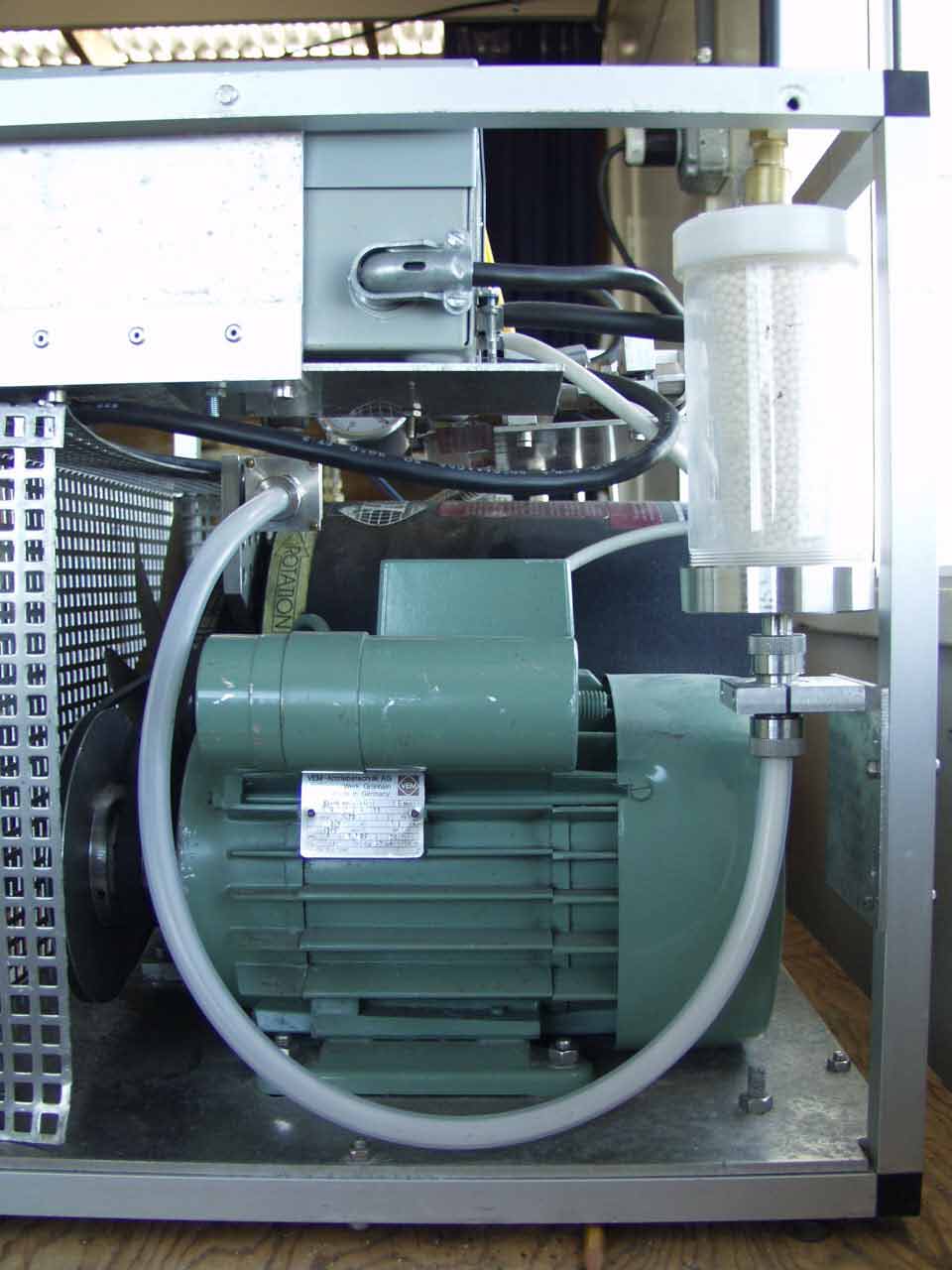
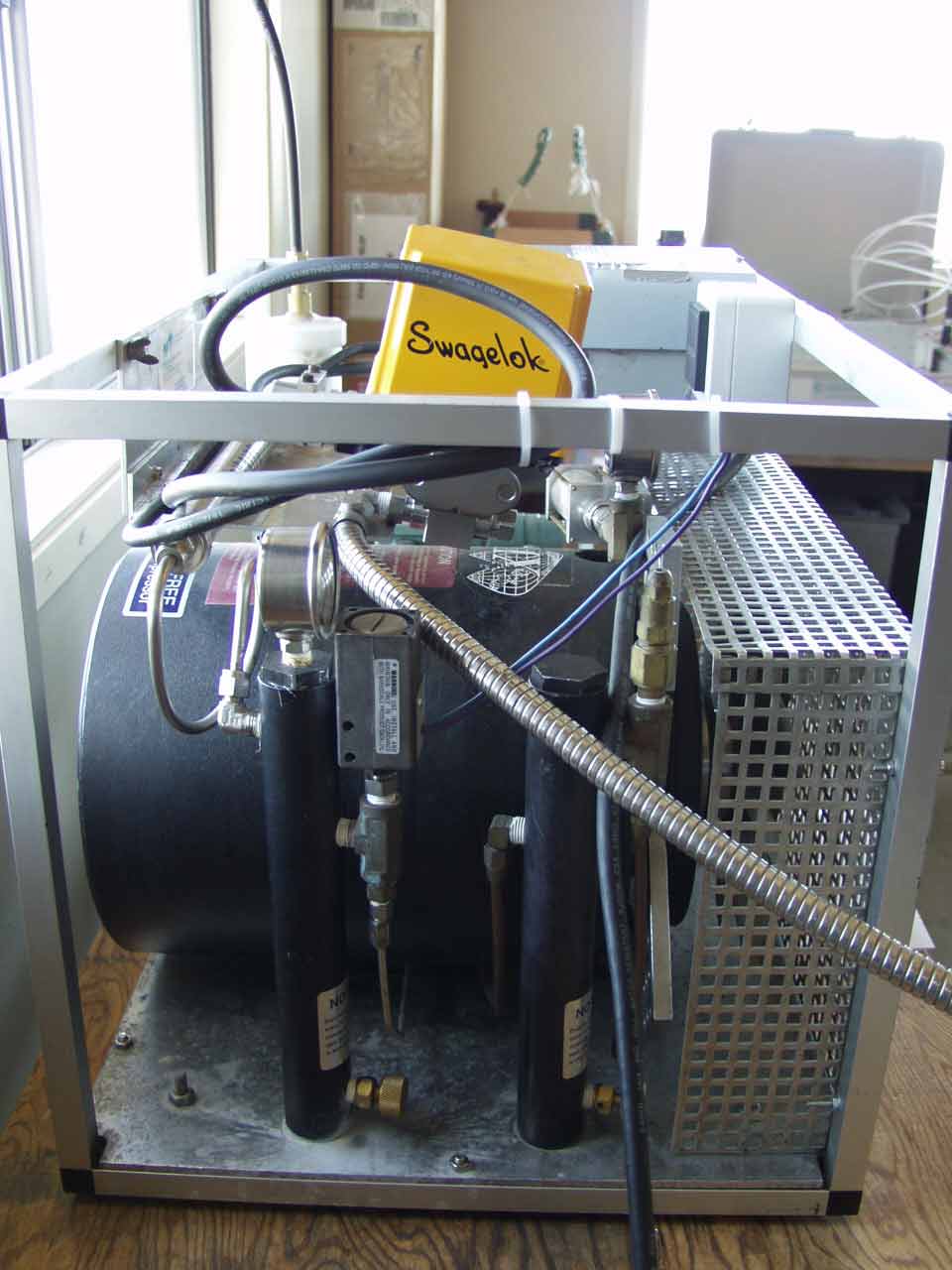
We collect large, whole air samples, extract the air in the laboratory, isolate the gas, and measure it using accelerator mass spectrometry. Samples are collected weekly, during down slope conditions (around 4am local time). Local meteorological conditions during sampling are noted (wind speed, direction, temperature, precipitation). The system is automated and the cylinder is filled to approximately 800 psi.
MLO observers note the sample pressure, close the sample cylinder, ship the cylinder to Stony Brook, and then attach a new sample cylinder to the sampling system and replace the drying cartridge. The night prior to collection, the valve to the sample cylinder is opened. Instrumentation consists of sample cylinder and National Weather Service Meteorology instruments.
Why is this research important?
We use 14CO as a tracer of OH (hydroxyl) concentration, which is important for its reactivity with many other trace gases. By doing so, we can determine the lifetime of those trace gases, and whether or not the lifetime is changing.
Are there any trends in the data?
To be determined.
How does this program fit into the big picture?
What is it's role in global climate change?
OH radical (hydroxyl) is the most reactive oxidant in the atmosphere. Any variation in OH abundance will lead to changes in the abundances of many trace gas species in the atmosphere, including methane (CH4), carbon monoxide (CO), and volatile organic compounds.
Comments and References
DISCLAIMER:
This material is based upon work supported by the National Science Foundation. Any opinions, findings, and conclusions or recommendations expressed in this material are the opinions of the author(s) and do not necessarily reflect the views of the National Science Foundation.
Lead Investigator(s):
John E. Mak
631-632-8673
MLO Contact(s):
David Nardini
808-933-6965 (x229)
Paul Fukumura
808-933-6965 (x223)
Web Site(s)
http://atmos.msrc.sunysb.edu/npages/Faculty_Prof/Mak.html
Date Started
October, 1998
(inactive 10/01-08/03)
Related Programs
NSF Globe Sunphotometer
Meteorology
Greenhouse Gases
Photographs: